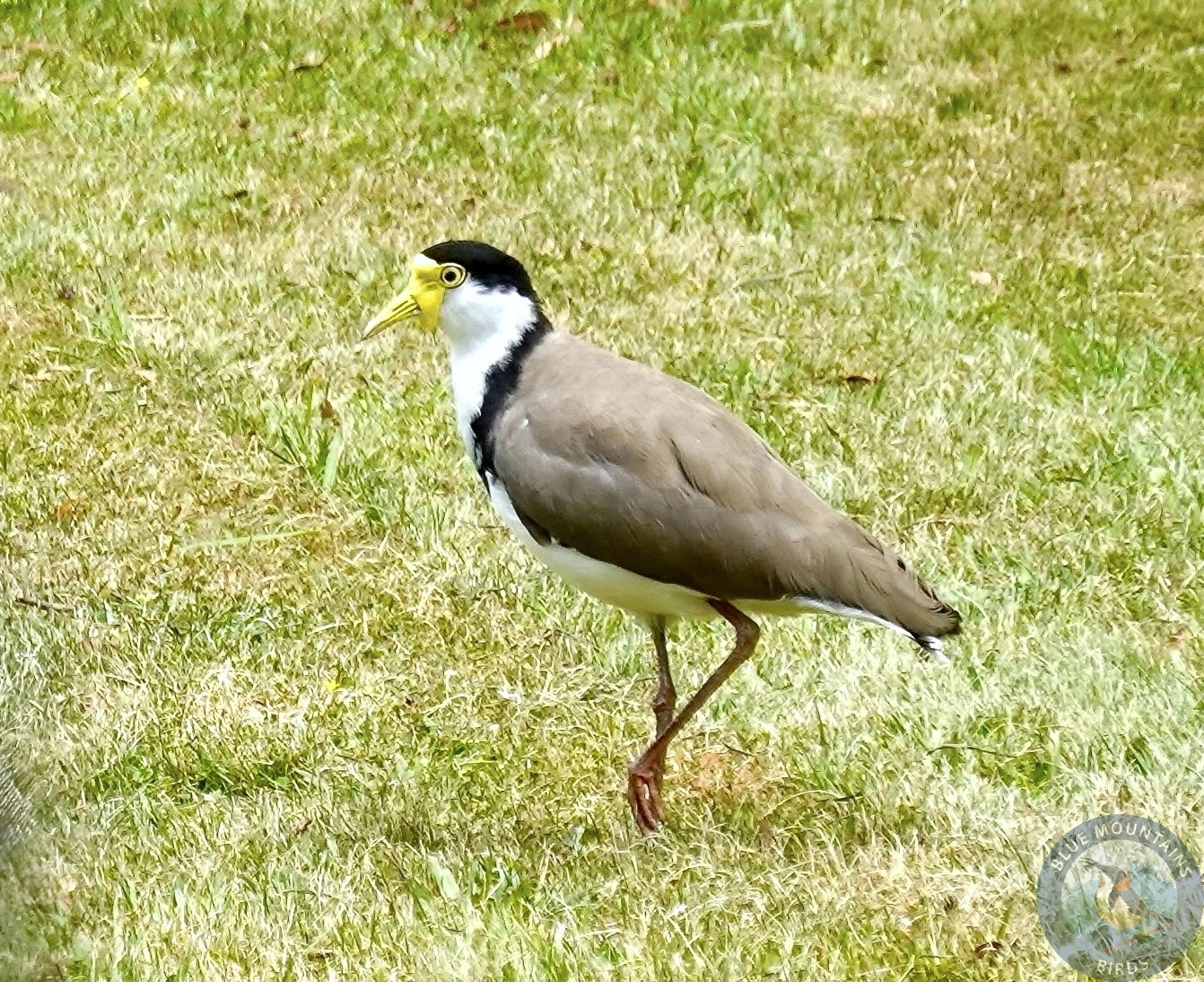
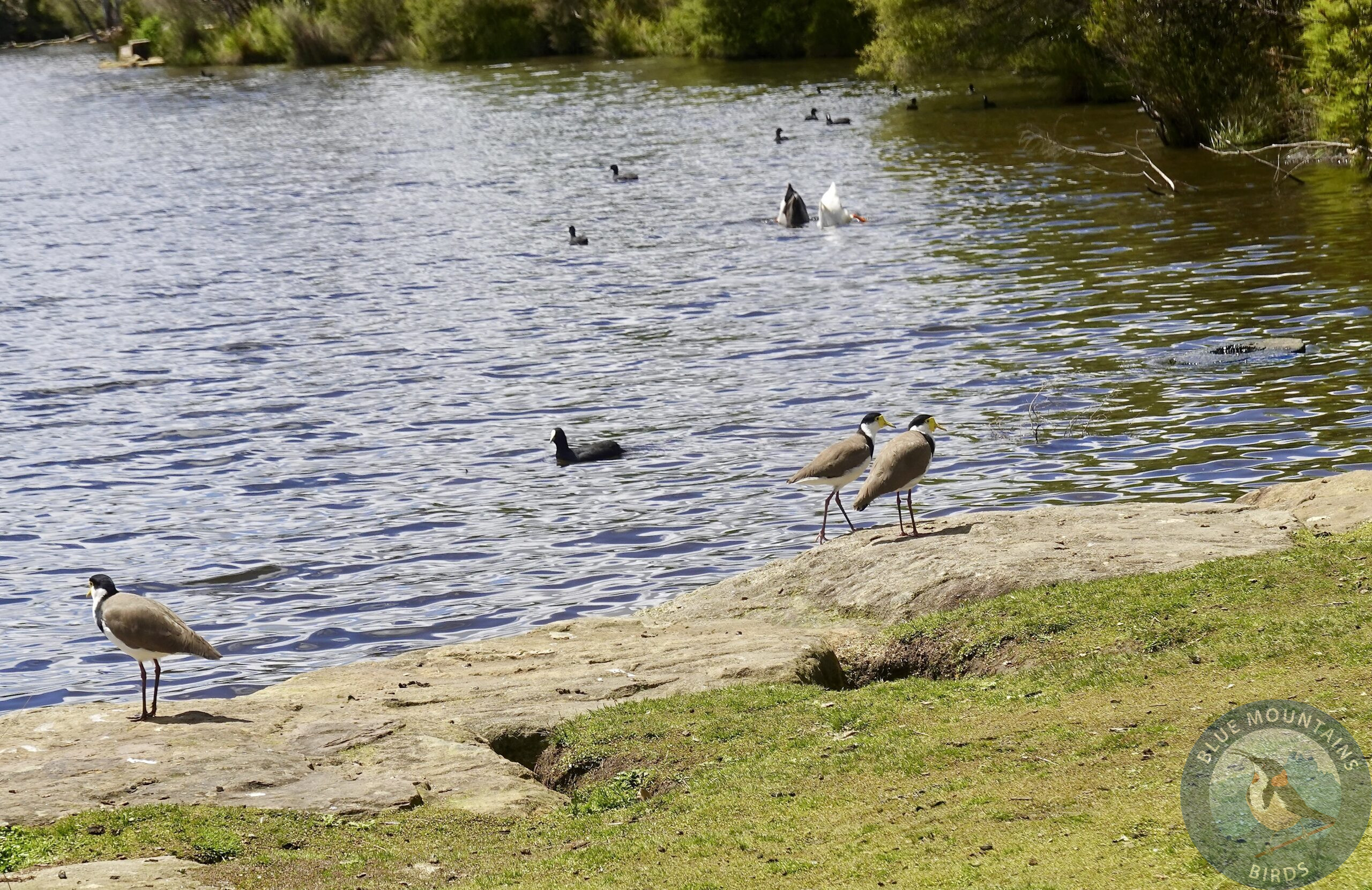
When the characteristic yellow wattles of the Masked Lapwing show good colour and condition, they indicate good health and help it to attract a mate.
Another characteristic is their tireless awareness of possible threats and ever readiness to challenge them. This is a good thing if you happen to be a Masked Lapwing egg or hatchling, for then it is likely to successfully defend you.
Not so good, however, if you’re a person walking, or rather ‘intruding’, near its open-ground nesting territory.
For here it is extra vigilant, especially during the recreational use of favoured places like ovals, reserves and golf courses by day, but again at night when cats, foxes and owls are about.
If the Lapwing’s menacing ‘kek-kek-kek’ call doesn’t work, then fast-flying at the threat, even striking it with their shoulder spurs, should.
And if that fails there’s a Plan B – a convincing broken-wing act, which tricks the predator into going after the ‘badly injured’ bird.