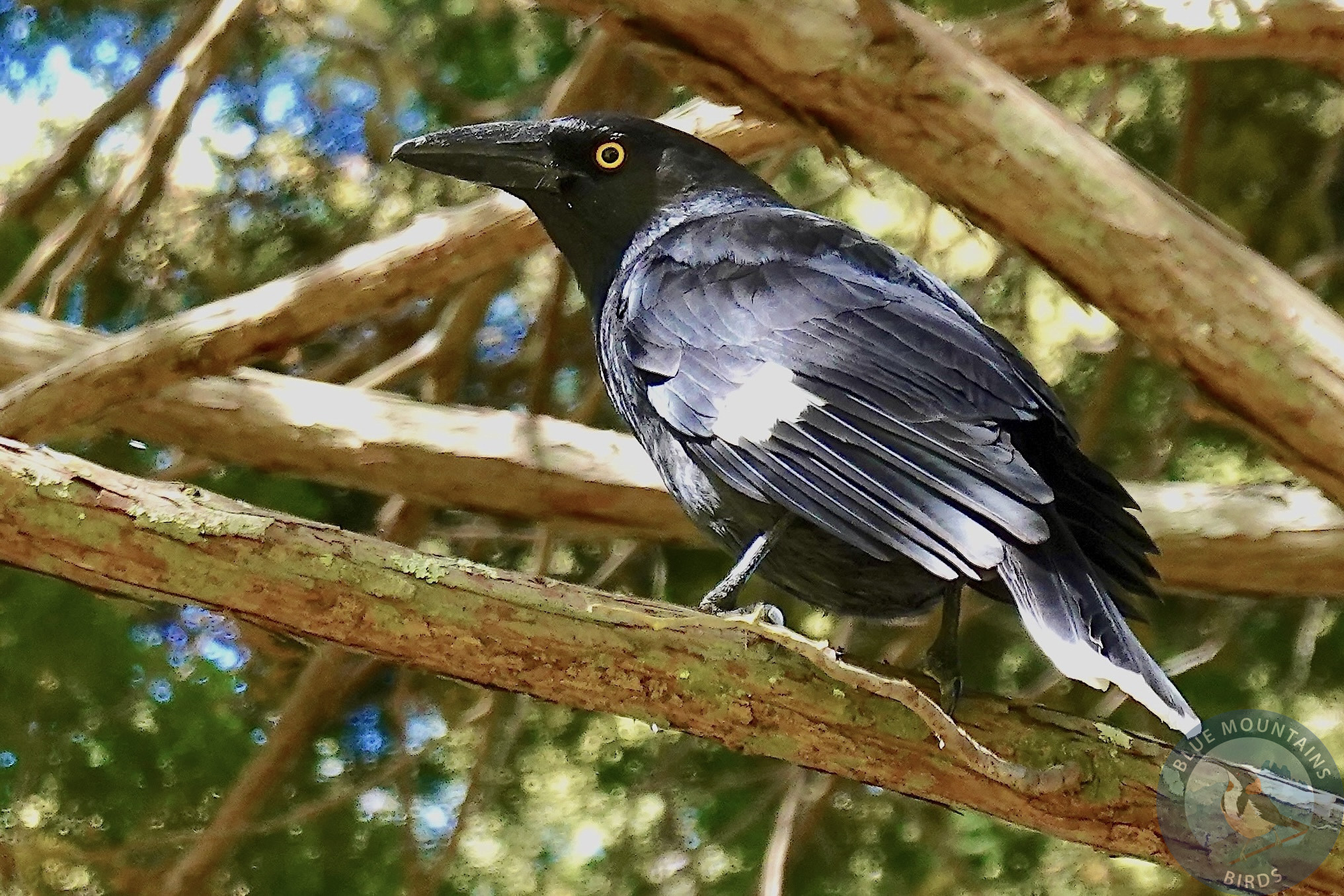
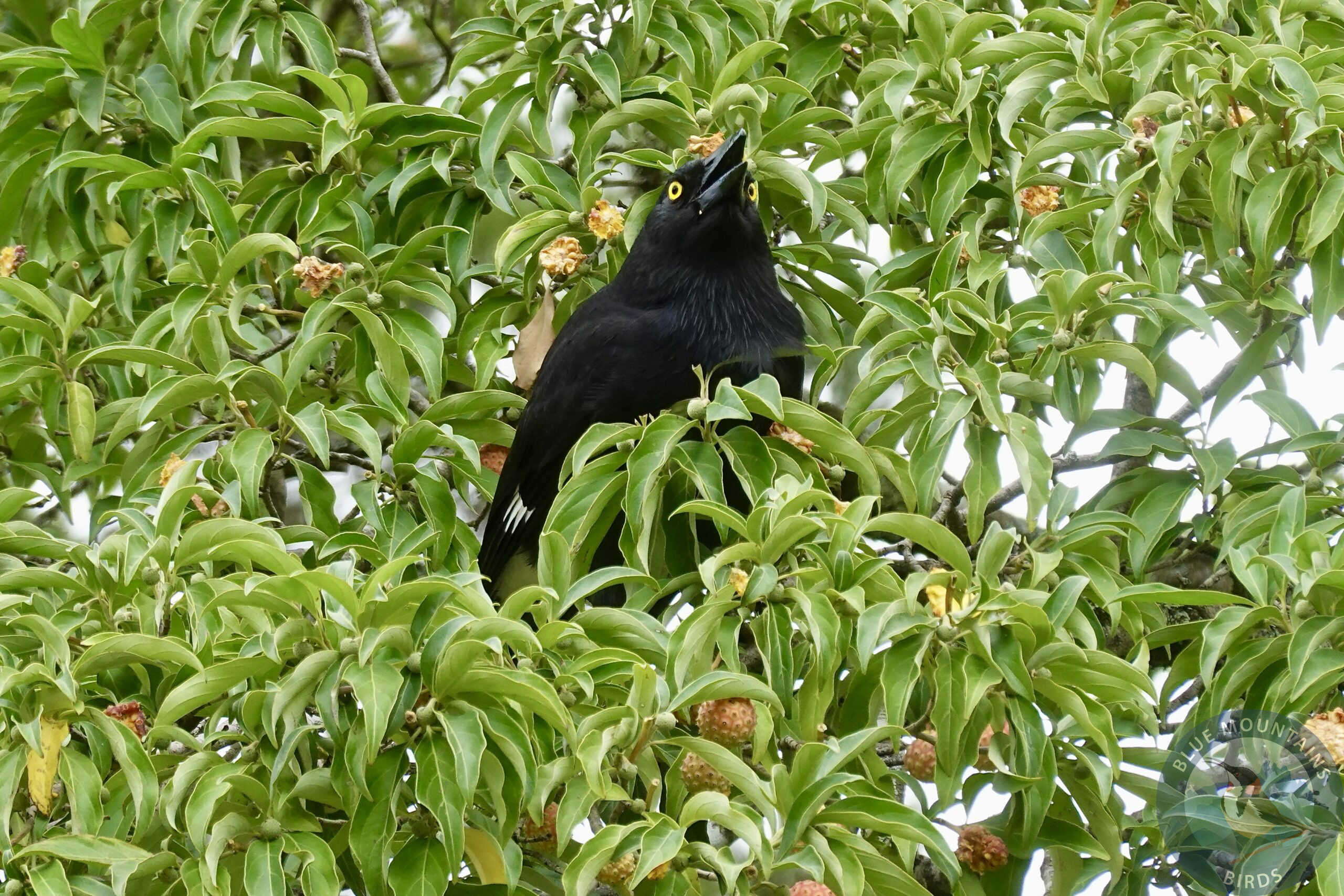
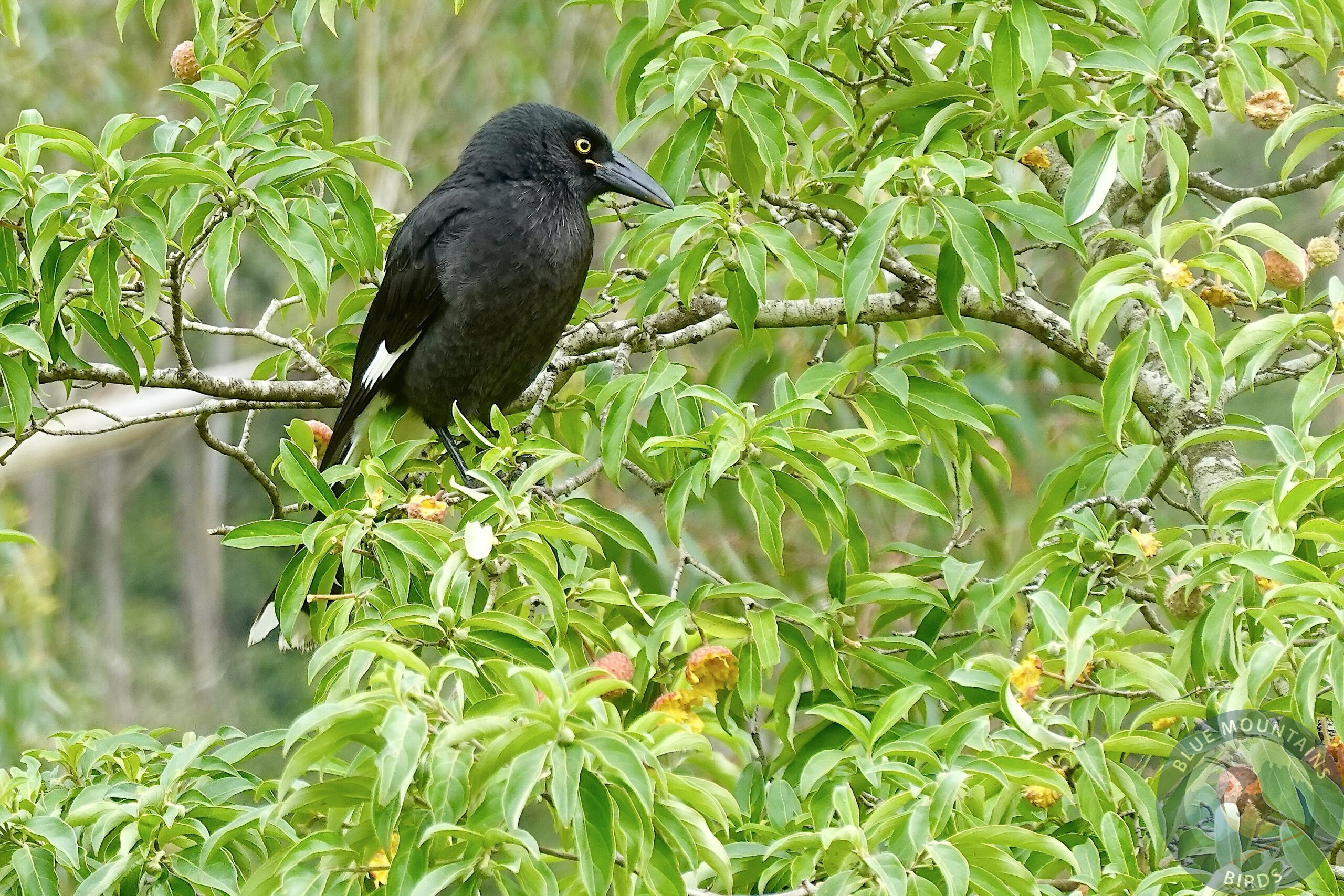
The scientific name Strepera, or noisy is a good fit for its piercing ‘curra-wong, curra-wong’ calls and loud whistling, while graculina meaning crow-like also fits.
The common name, Currawong, echoes that signature call and is another originating in an Aboriginal language.
Common in forests and in an increasingly urban range, the Pied Currawong feeds on fruits, seeds and berries as well as on lizards, small birds and their eggs and young.
Small birds naturally fear it, hence the Brown Thornbill’s trick of imitating the New Holland Honeyeater’s Hawk-alert call to make a nearby Currawong disappear fast to save its own skin. (See Brown Thornbill and New Holland Honeyeater.)
In Autumn many Currawongs congregate into flocks and migrate to lower altitudes feeding in Eucalypts as they go, particularly on phasmids or stick insects.
The Australian Museum website notes that Pied Currawongs: ‘have adapted well to living in urban areas and their growing numbers have been implicated in the fall in numbers of the smaller bird species’.